Buenavista Lanzarote
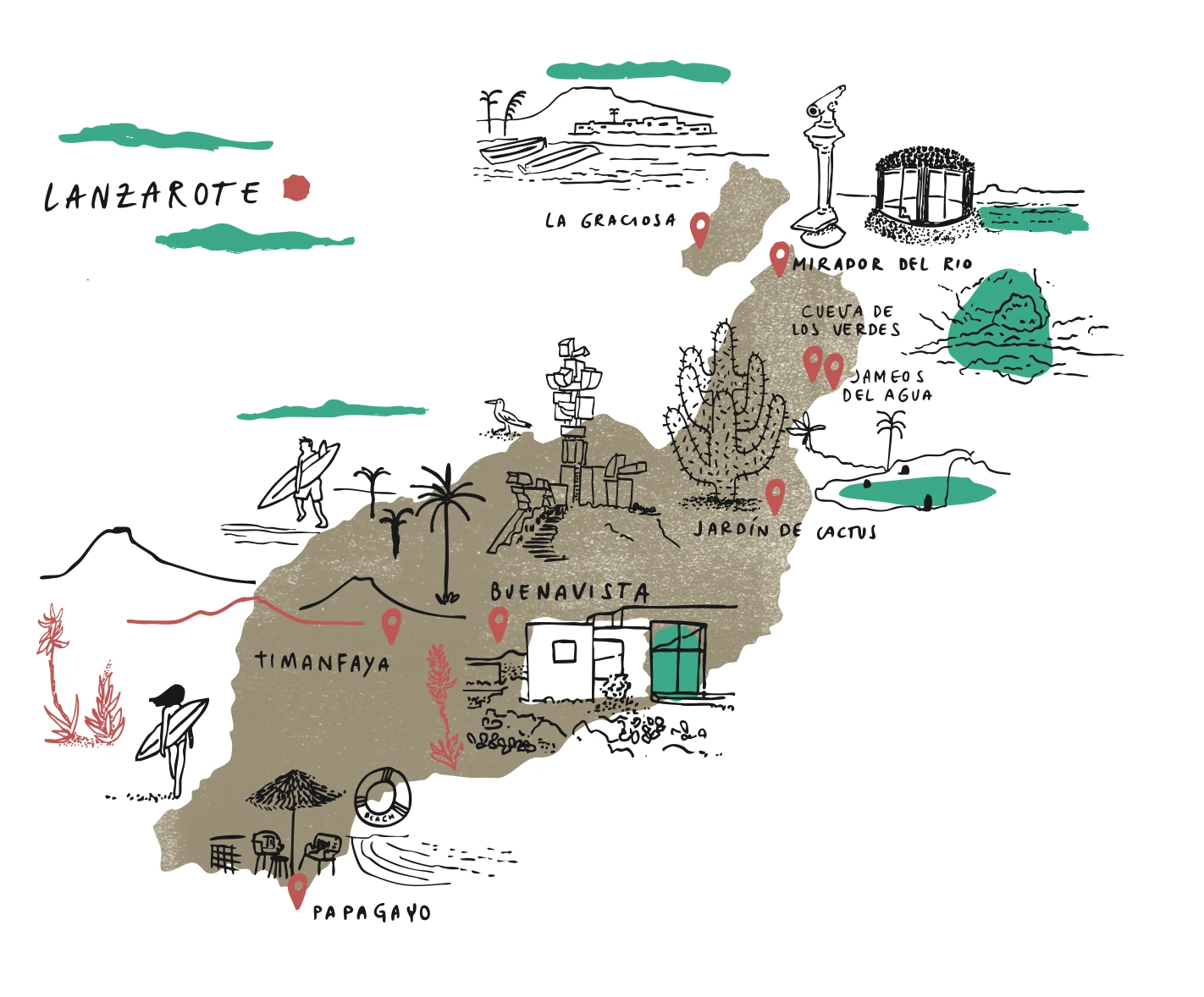
Between Timanfaya and La Geria.
The landscape is the project.
In the wine-growing heart of La Geria, an old rural finca becomes a manifesto for contemporary hospitality. A microcosm in which the architecture chooses to make itself invisible, making room for silence, volcanic matter, and a vibrant community of creatives.
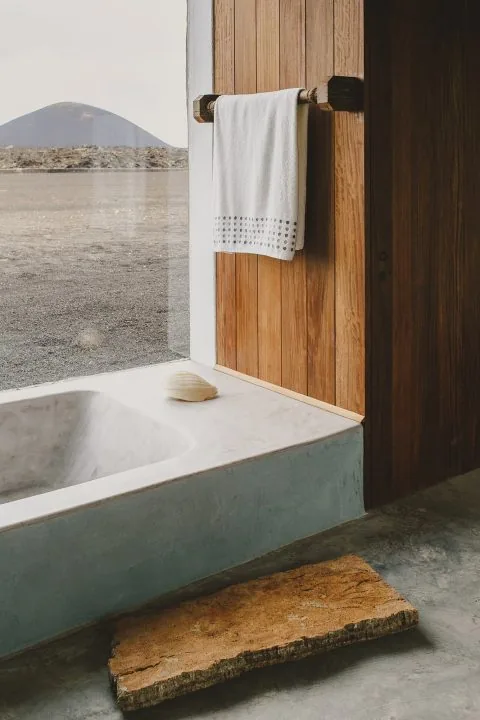
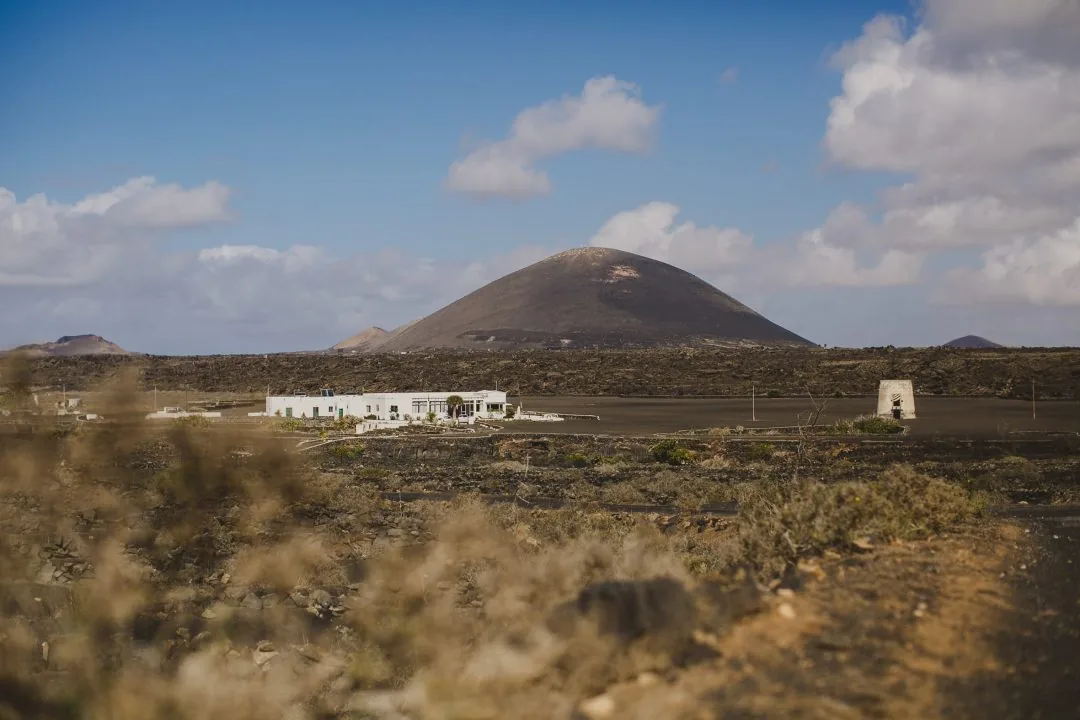
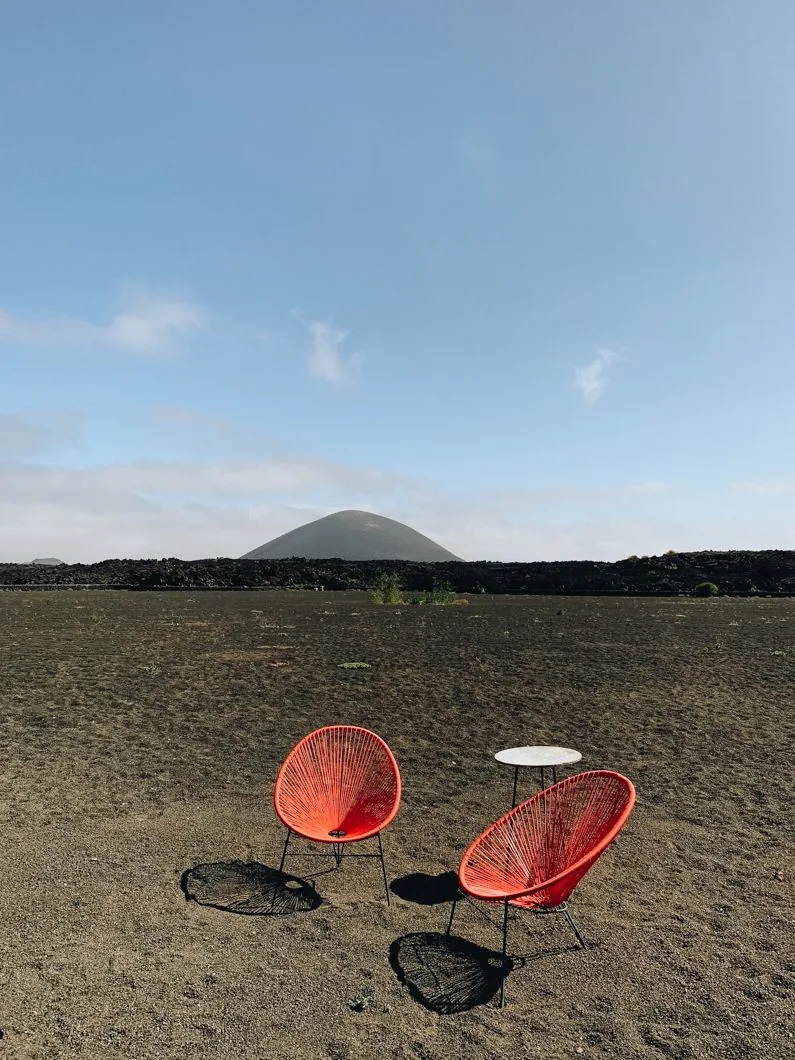
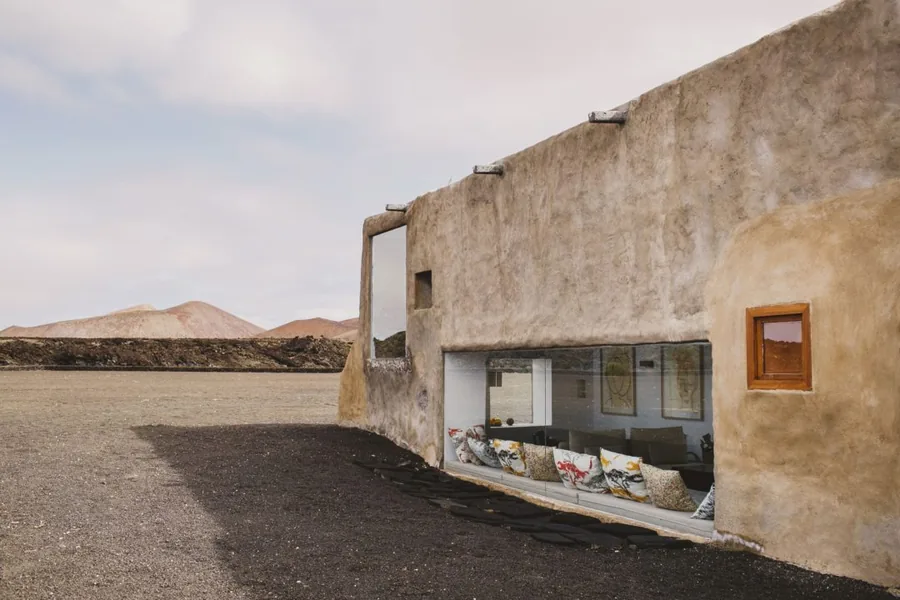
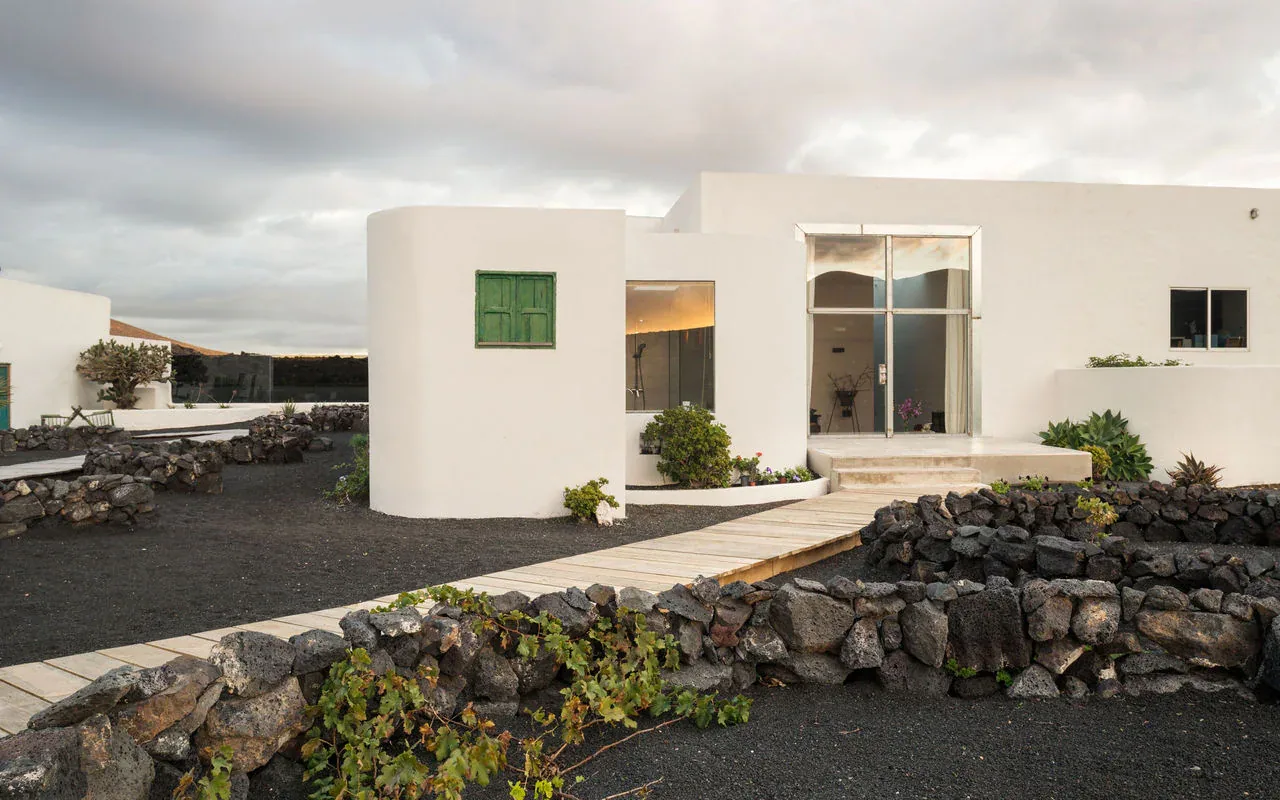
Some islands let themselves be crossed superficially, consumed by distracted tourism. Lanzarote, by contrast, imposes a radically different rhythm, almost primordial. You understand it the moment you leave the main road that cuts inland from Arrecife airport: the sea disappears behind volcanic profiles and the land takes absolute command. Fields of black lapilli (picón), extinct craters, dry-stone walls that read like abstract sculptures, and the blinding white of lime render compose a rigorous geometric sequence. In this stark, magnetic setting, in La Asomada, stands Buenavista Lanzarote. It is not a hotel in the conventional sense, but a successful exercise in belonging, and a house held open toward the horizon of Timanfaya.
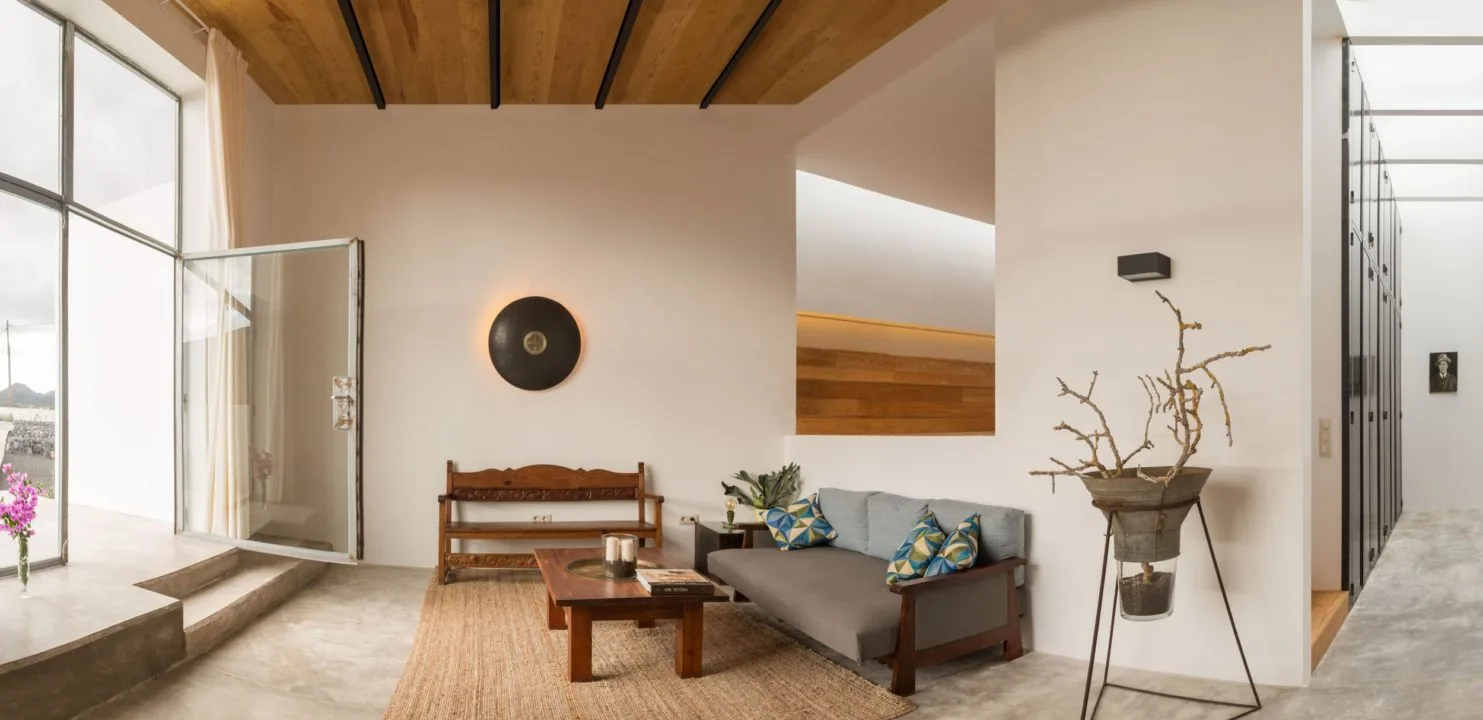
Design destination — a place to stayIn the midst of a landscape that feels like another geological era, among the volcanic cones of Timanfaya and the black vineyards of La Geria.
A project born from the land
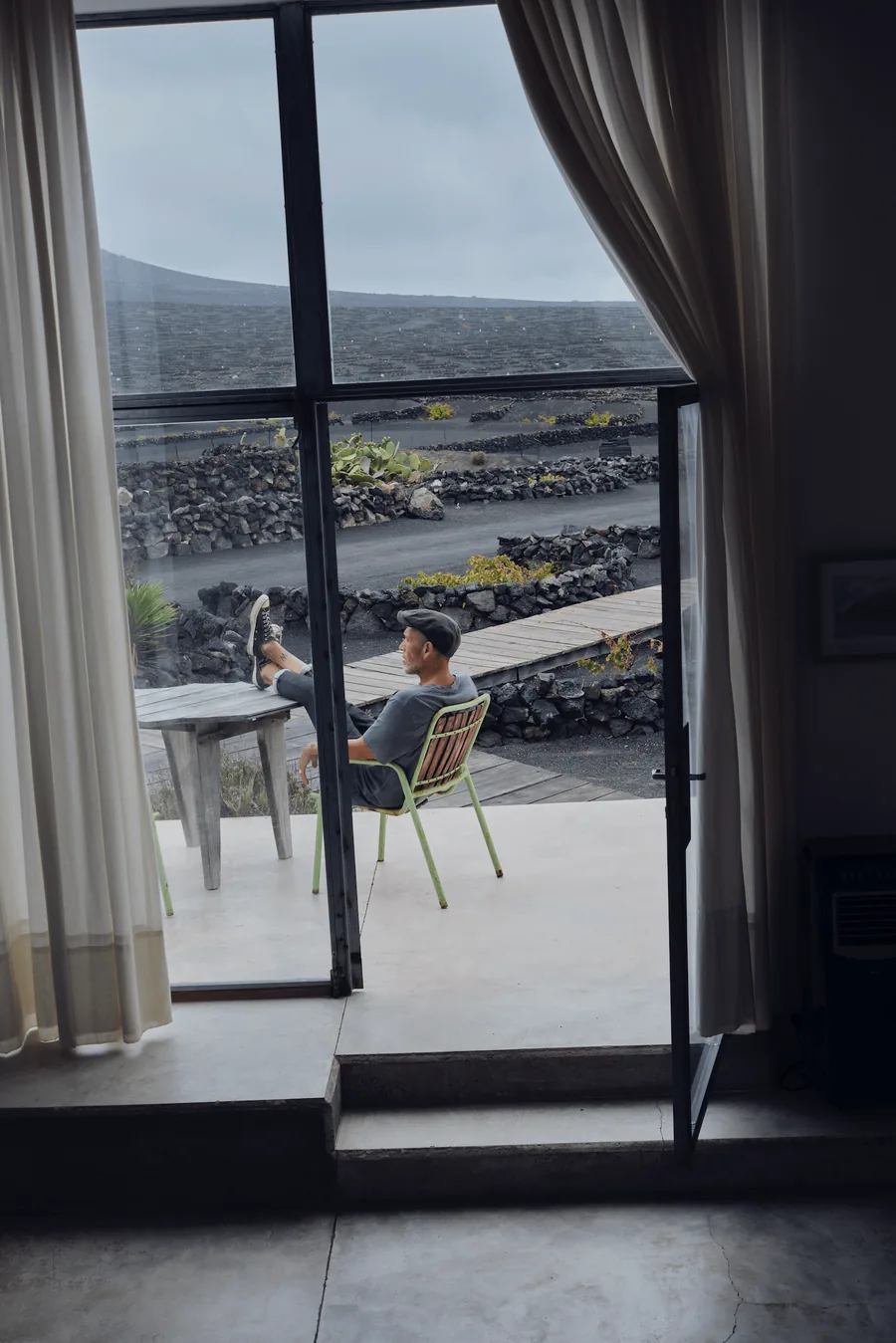
The project springs from the precise determination of Gonzalo and Mayca Bethencourt. When they bought this old agricultural finca, the intent was not to apply a ready-made aesthetic format, but to recover a fragment of rural memory in order to continue an old story rather than interrupt it. The property sits within La Geria, the wine-growing district shaped by the resilience of local farmers after the devastating eruptions of the 18th century. Here, to survive drought and Atlantic winds, generations dug thousands of hollows into the ash, protecting each vine with semicircular dry-stone walls, the zocos. Buenavista folds into this spontaneous agricultural pattern: its edges blur into the vineyards, presenting itself not as an isolated hospitality property but as an outpost welcoming travellers, intellectuals and artists united by the same curiosity toward the island.
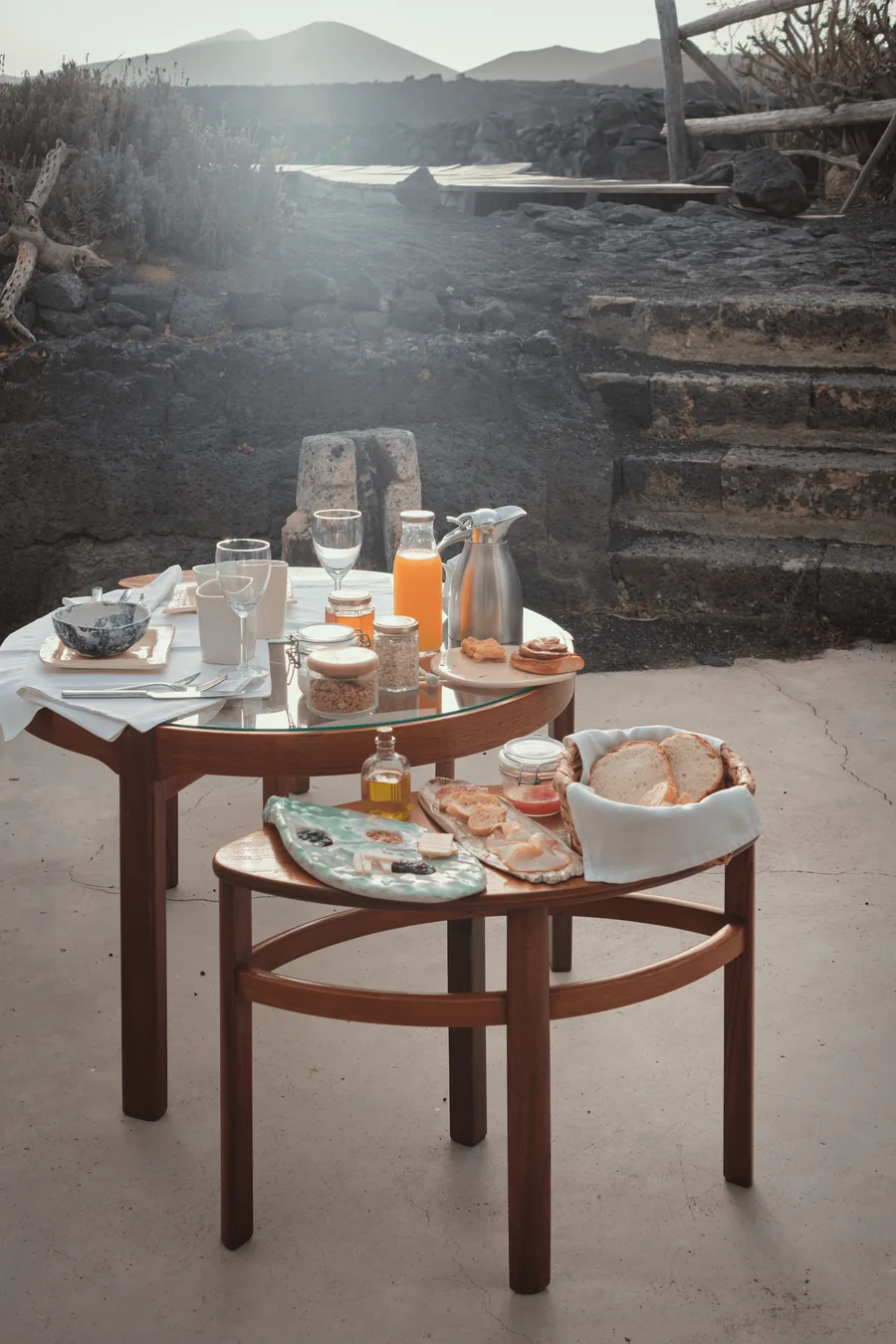
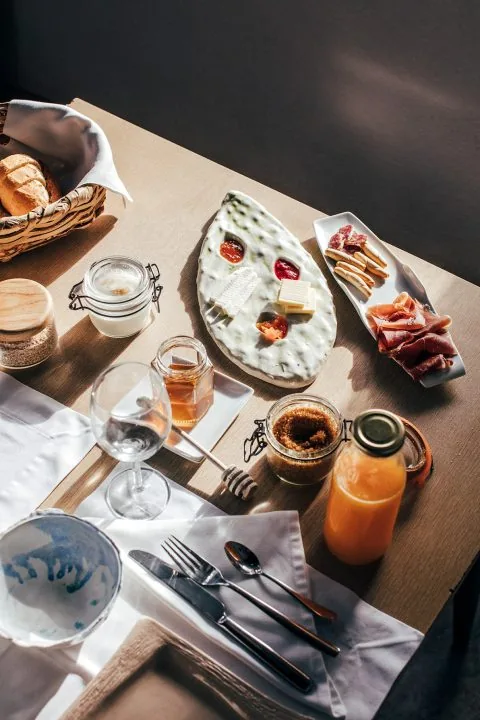
Those who choose to stay here quickly sense that hospitality is only the starting point of a deeper cultural undertaking. Gonzalo Bethencourt does not act as a simple hotelier, but as a cultural mediator. He personally guides guests through an underground, authentic Lanzarote made of small organic wineries working volcanic malvasia grapes, artisan workshops hidden in inland villages, and lesser-known geological routes. The finca's daily life faithfully mirrors this philosophy of proximity: breakfasts are made exclusively from local ingredients sourced from small organic producers nearby, such as neighbouring La Atalaya, establishing an intimate, rural bond that entirely redefines the notion of contemporary luxury.
Property
5 independent suites
Guests
up to 7 people per suite
Amenities
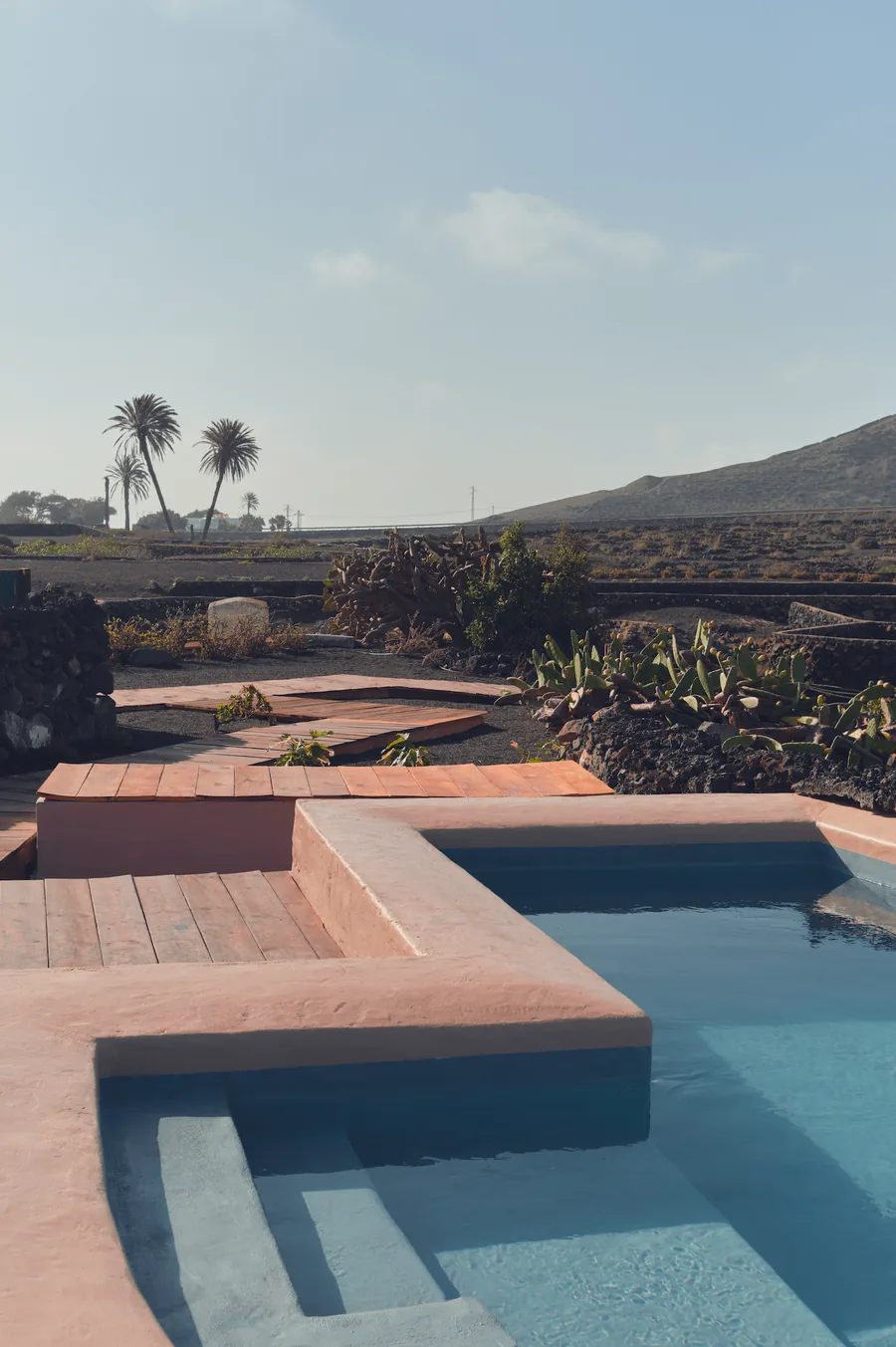
Pool, Spa, Private restaurant
Location
Inland, close to town centre
Points of interest
20 minutes from Puerto del Carmen
Building without adding
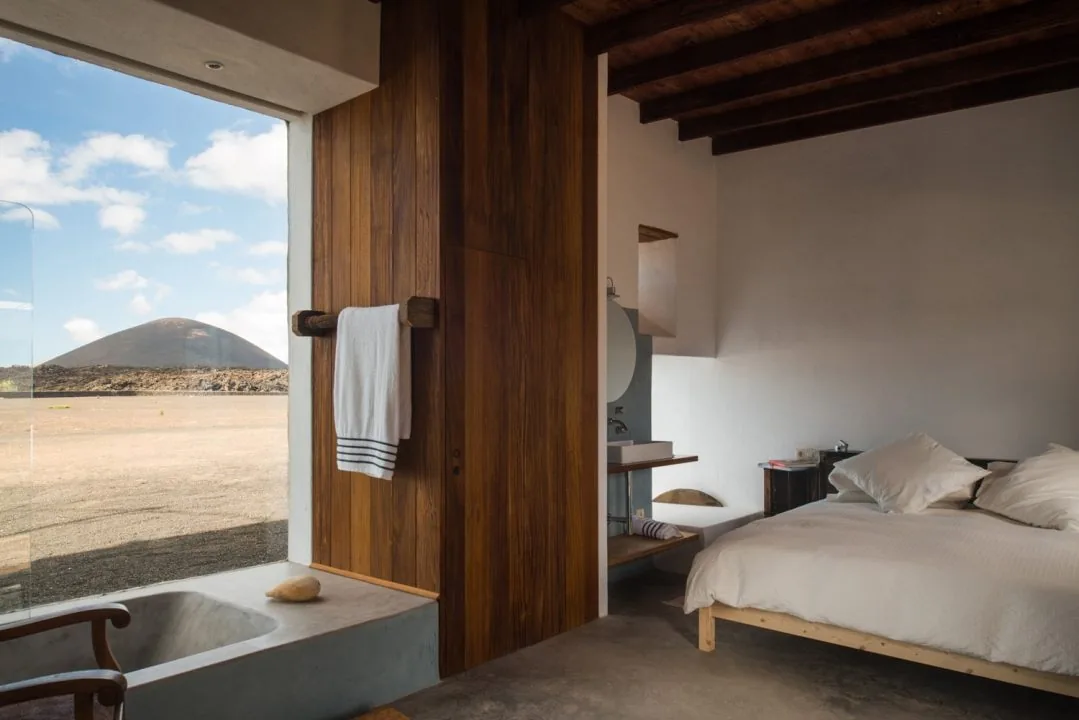
To translate this vision into physical space, Gonzalo brought in Néstor Pérez Batista, a Lanzarote-born, Berlin-based architect and childhood friend. The brief given to him was deceptively simple, yet intrinsically complex: to intervene as little as possible, subtracting rather than adding. Pérez Batista approached the existing structures — old agricultural warehouses and disused stables — respecting their material memory and original volumes. The design challenge centred on stripping away the superfluous, working on the flow of light, the openings, and the creation of patios able to sustain a constant dialogue between the interiors and the harshness of the landscape outside.
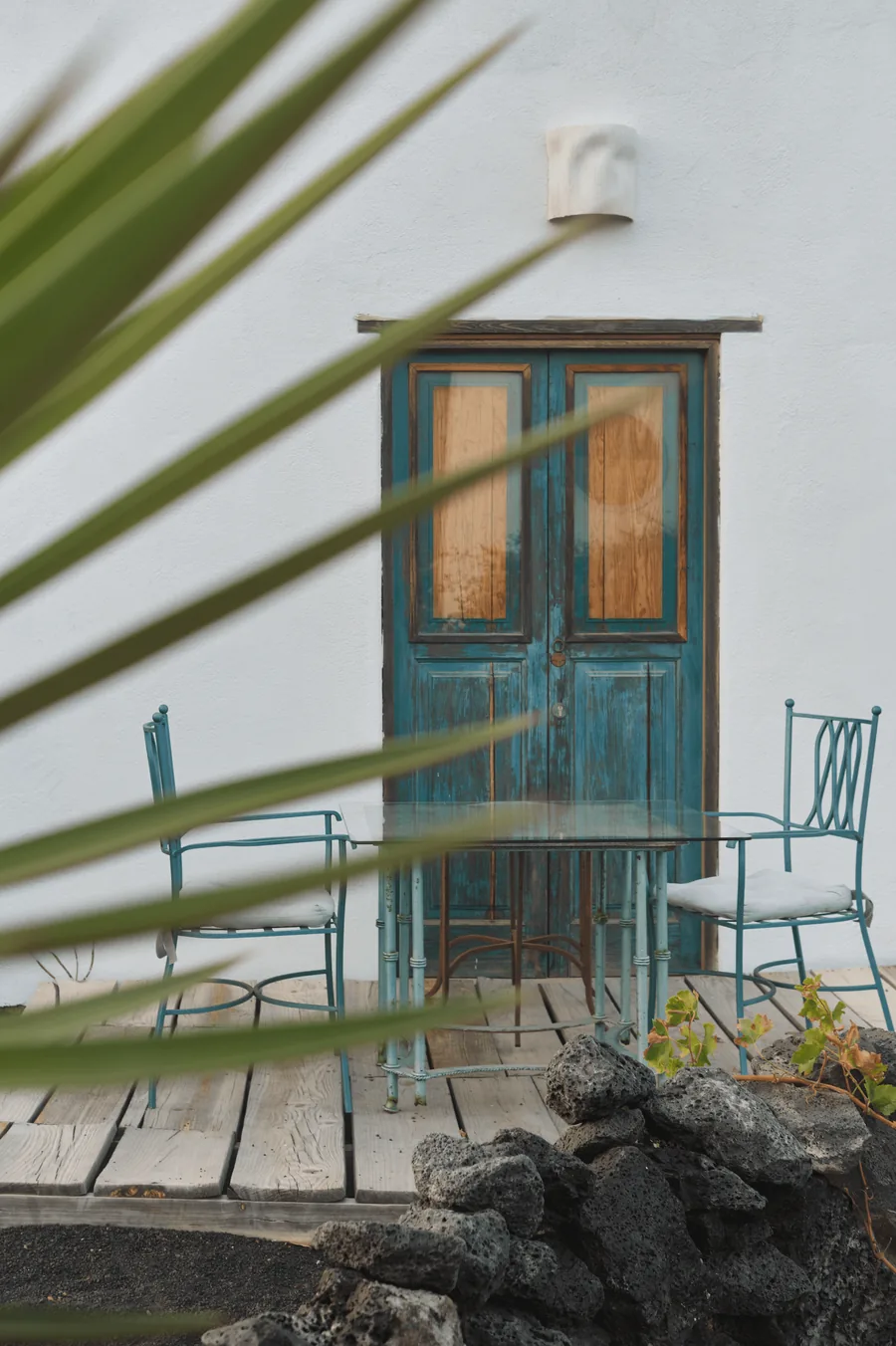
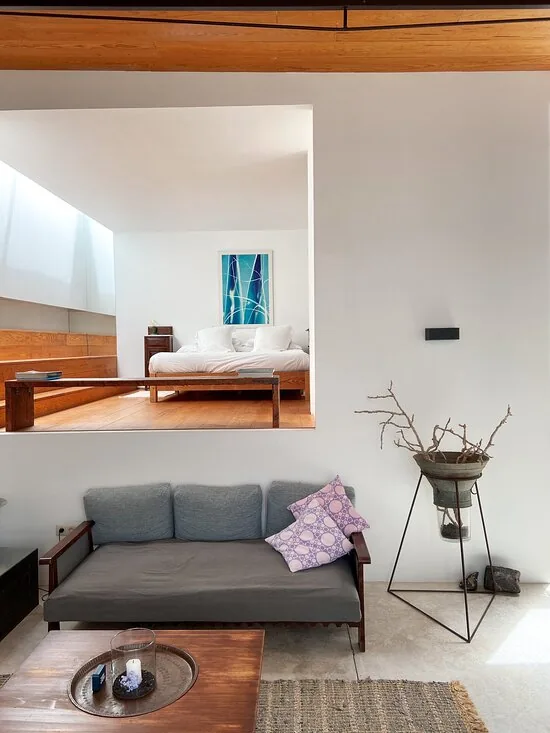
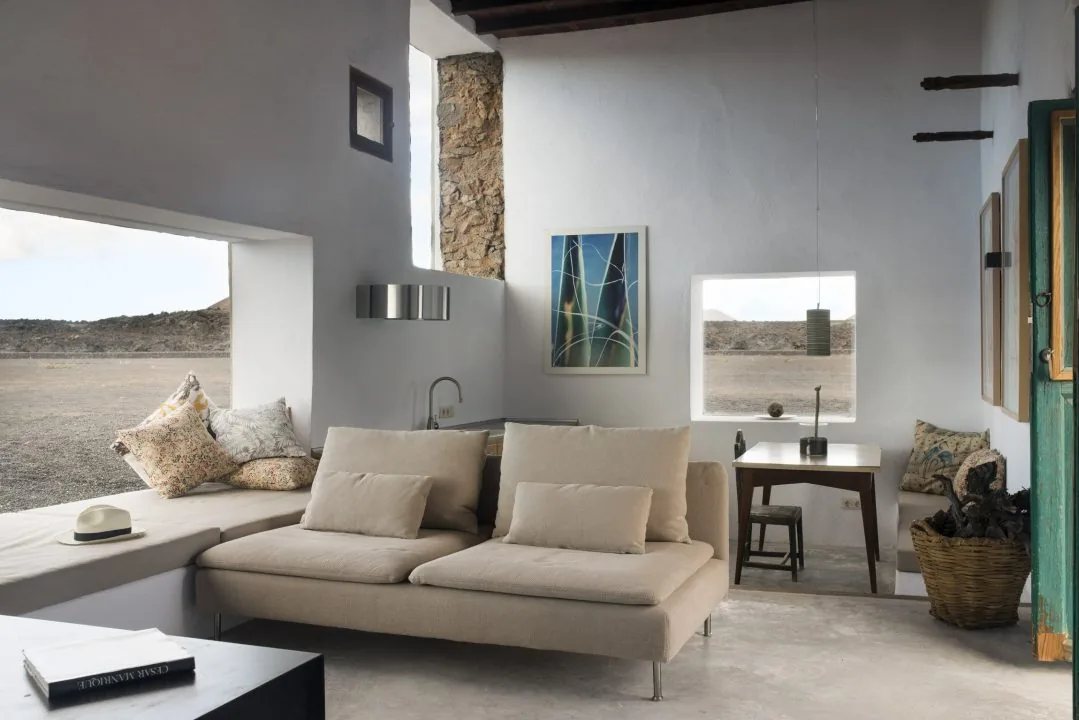
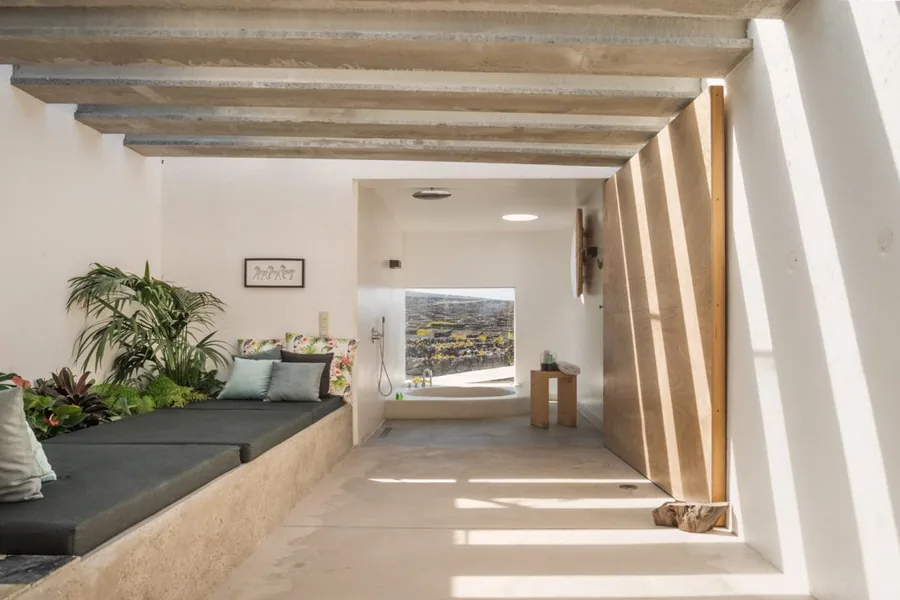
The five suites that make up Buenavista are conceived as genuine optical devices. Full-height glazing replaces the perimeter walls on the panoramic side, framing the volcanic cones so that nature isn't merely a view, but the true protagonist of the space. The choice of materials is rigorous and free of hierarchy: local volcanic stone, white lime render, raw wood and architectural concrete coexist with absolute naturalness. There are no details designed to impress, no exhibited technological solutions; the architectural quality emerges from the millimetric precision of the proportions, from the handling of empty space, and from the way shadows move across the rough walls over the course of the day.
This approach settles, with maturity, into the path traced by César Manrique, the artist who in the 1960s and '70s codified the aesthetic of Lanzarote by integrating art, nature and architecture. Yet Pérez Batista's work avoids nostalgic quotation or academic reproduction of Manrique-era modernism. Instead, it chooses a contemporary, spare and autonomous language, one capable of interpreting the master's principles — respect for the land, chromatic integration, the elevation of light — without ever turning them into decorative cliché.
Fuorisalone verdictThe perfect place to breathe in the refined, natural atmosphere of Manrique's architecture.
Carnet de Voyages
Illustrations by Silvia Gherra

Hospitality as cultural practice
If Pérez Batista's architecture defines the spatial frame, it is the dense web of human relationships that gives Buenavista its deeper identity. Luxury, in this corner of La Geria, sheds any formal ambition — there are no monumental spas or Michelin-starred restaurants — to coincide instead with the chance to become part of a lively, cultured creative community. The finca works as a magnet and a meeting point for architects, designers, winegrowers and intellectuals who gather here to continue a conversation between people and land that has run on this island for centuries.
The presence of art within Buenavista doesn't answer to a curatorial programme calculated in advance, but represents the natural evolution of a lived-in house. The property runs a flexible artist-residency programme, inviting creatives and artisans to temporarily inhabit the spaces and let themselves be shaped by the silence and light of Lanzarote. A tangible example is the collaboration with Basque-born ceramicist Eguzkine Zerain, who has settled on the island: her tableware and one-off stoneware and porcelain pieces furnish the rooms permanently, offering a tactile experience that recalls the porous texture of volcanic lapilli. Every object in the interiors carries the trace of an encounter, the echo of a synergy born spontaneously over a glass of wine.
Discover all the design destinations recommended by Fuorisalone.it
Even the property's limited wine production, curated together with small independent local growers, answers to this same logic of preserving material culture. At a moment when Lanzarote is living through a new, fertile design season — one able to look to the future without remaining a prisoner of its own past — Buenavista stands as one of its most lucid and coherent interpreters. Leaving the finca, you realise that the most lasting memory has nothing to do with a decorative detail or a material comfort, but with the feeling of having taken part, if only for a few days, in a human and geographic ecosystem in constant becoming.